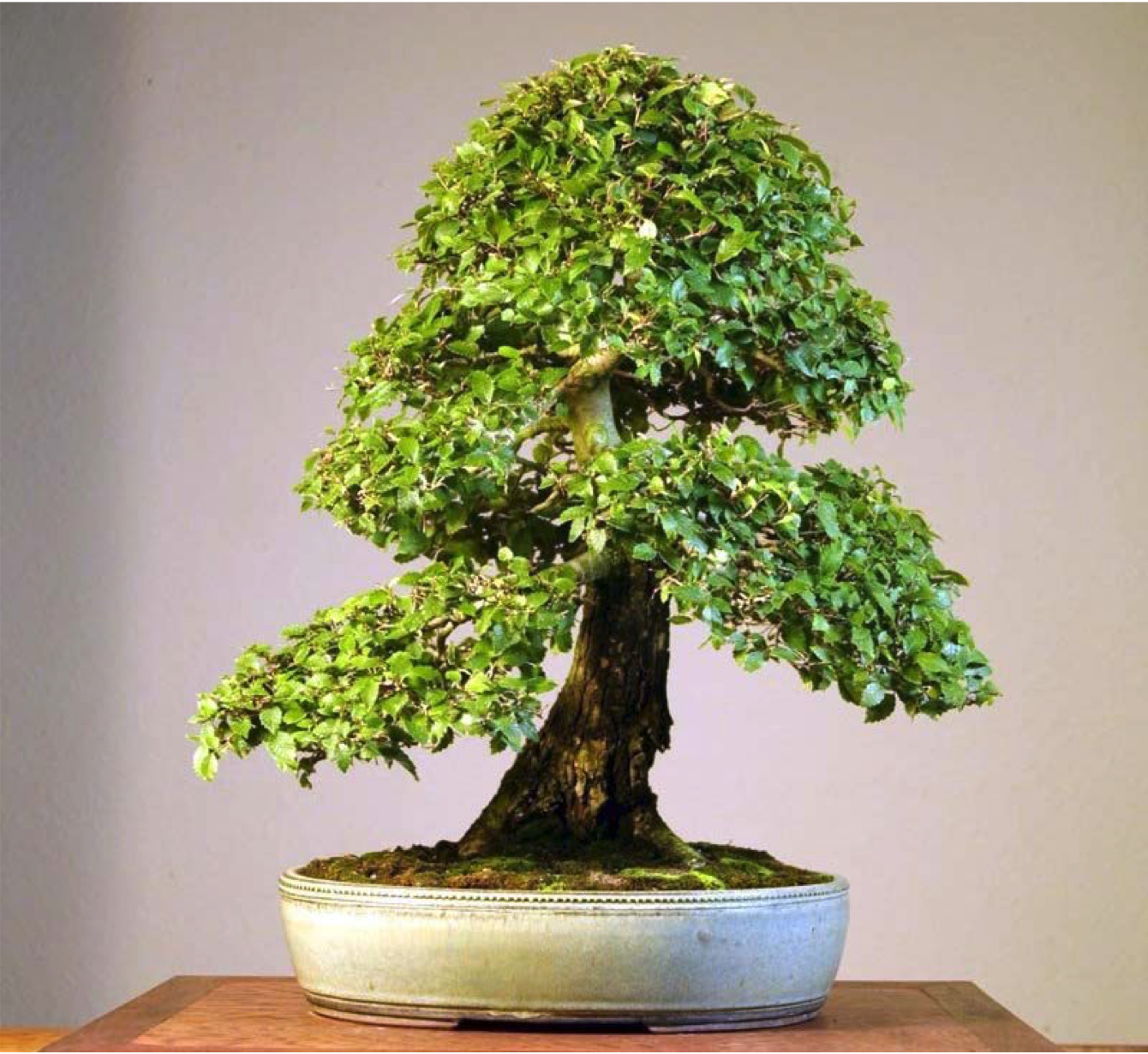
Louisiana Natives as Bonsai: American Elm
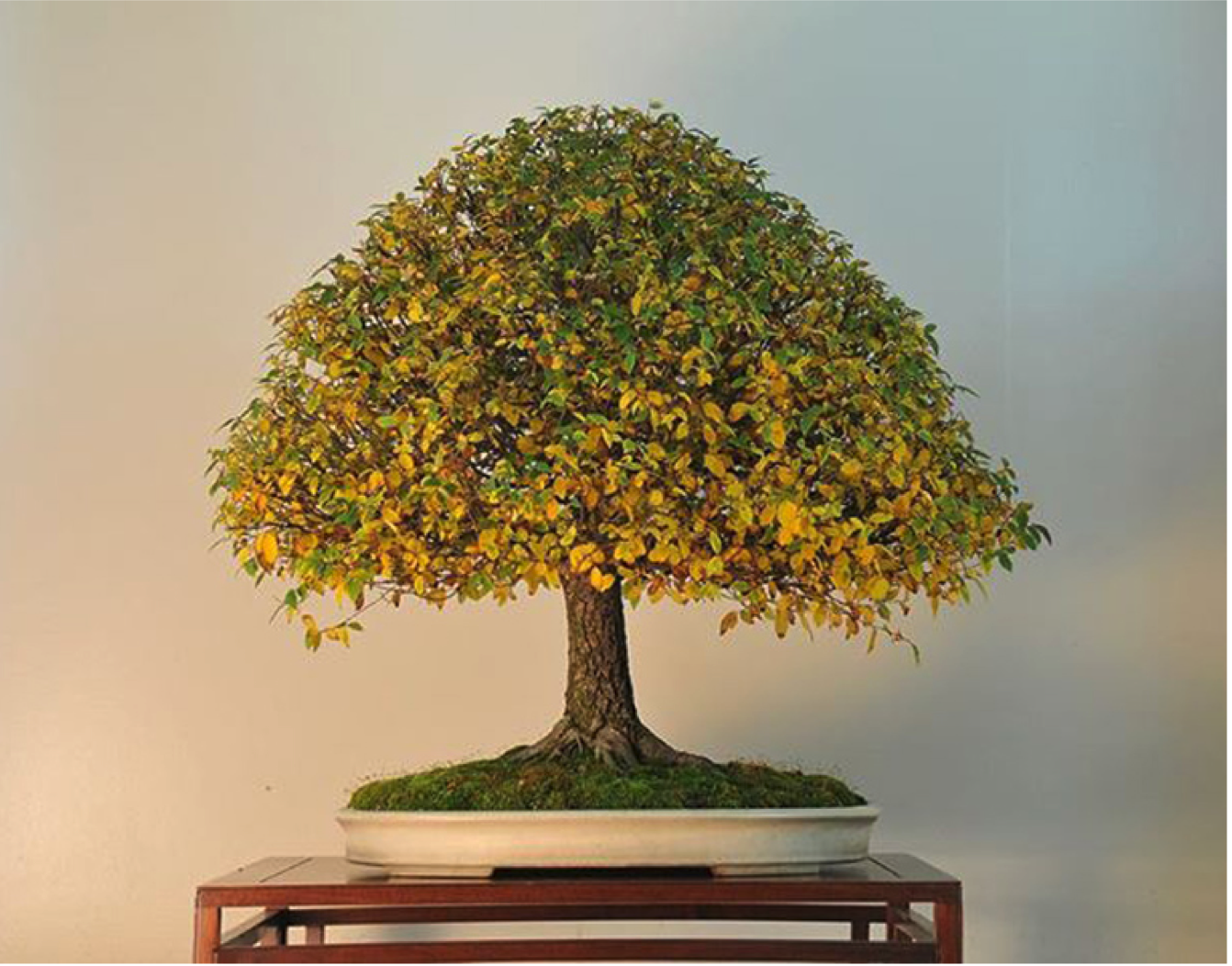
The American Elm (Ulmus americana), also called White Elm, is a deciduous tree that can grow up to 90 feet tall. In Louisiana, it is typically found growing in swamps and bottomland forests. It prefers soils that are extremely rich in organic matter and if provided that type of soil, can be found growing at higher elevations, provided it can get enough moisture.
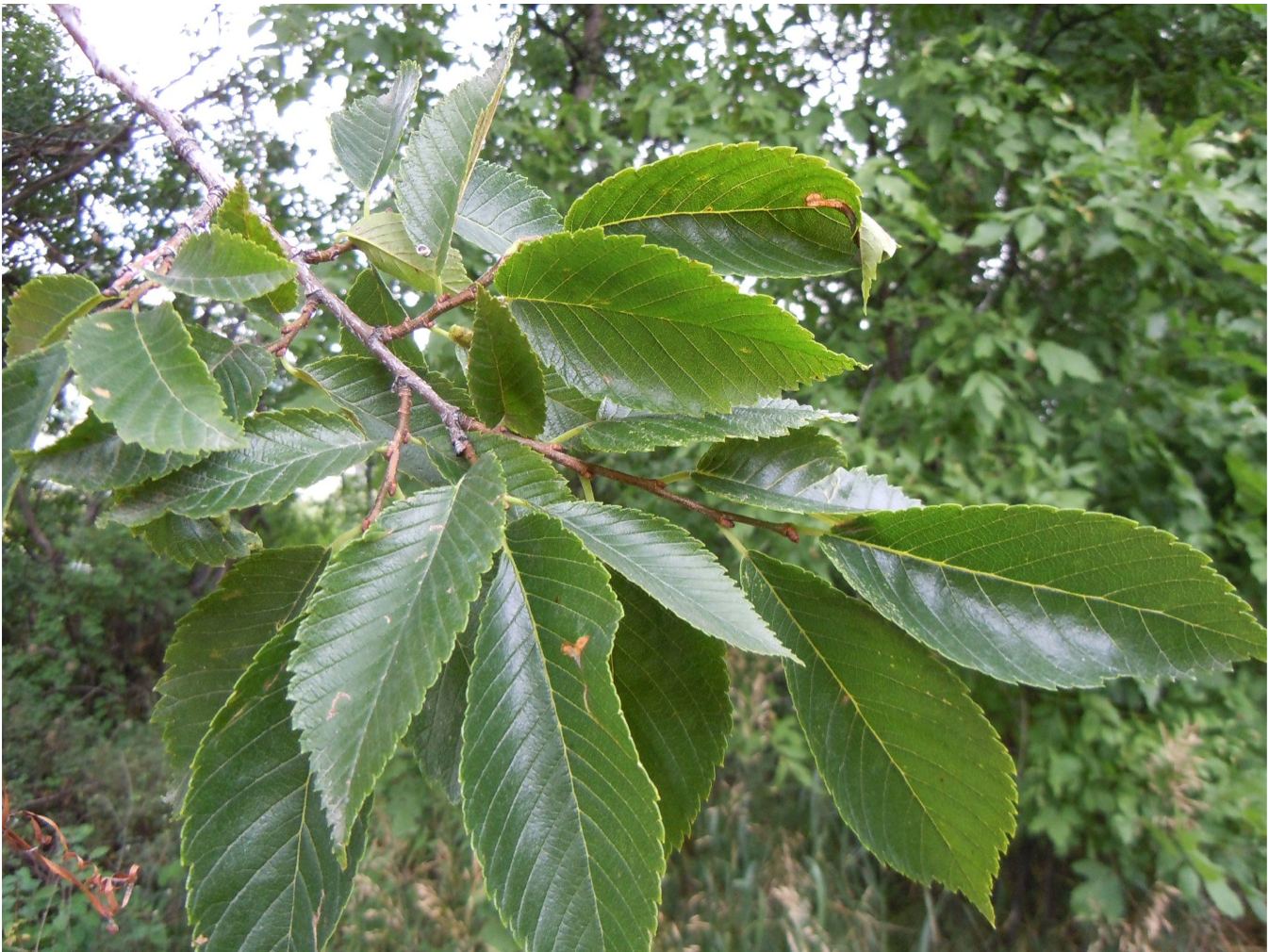
The leaves are oval and are doubly serrated. They have an unequal base and a tip that draws to a point. The leaves alternate along stems and shoots and range in size from four to six inches in length and from two to three inches in width. However, in bonsai culture, the leaves can be reduced to about an inch in length.
The bark is gray in color and becomes rough, with vertical fissures as the tree begins to mature. Young trees are very vigorous and can grow three to six feet a year! This is great news for bonsai artists who want a species that can be developed rather quickly.
Their shape is typically with a rounded canopy and spreading branches like a live oak. However, they can also grow with a central leader that diffuses as it reaches the uppermost canopy and multiple branches growing from that central leader. In any case, they still grow with a rounded canopy.
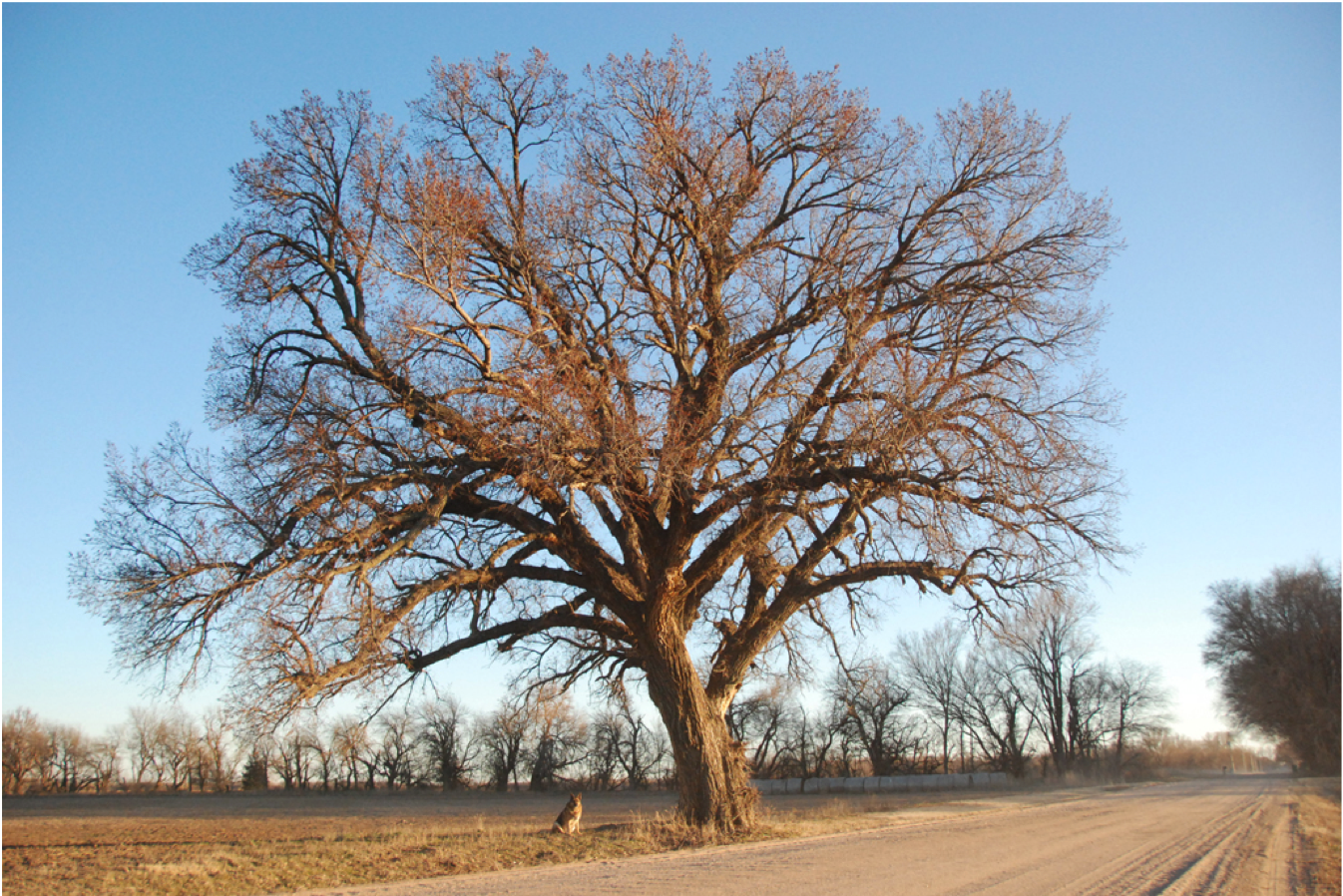
Photo taken of a mature American Elm growing in West Texas. Note the Live Oak-type growth pattern.
American Elm is susceptible to Dutch Elm Disease in nature. In bonsai culture, the most common problems encountered are brown spot disease – a fungal infection and aphids. Both of these issues are easily treated and are best controlled with preventative maintenance.
American Elms make great bonsai material. They can be grown in the full range of bonsai styles, but to me, they are most elegant when they are styled using their natural growth pattern. Because their branches often sprout from a central point on the trunk and because they are such vigorous growers, you can use the stump-cut method on larger pieces of material and develop an excellent bonsai in just a few short years.
However, if you choose to grow them in the traditional first branch, second branch, back branch, etc., they are easily adapted to such designs.